
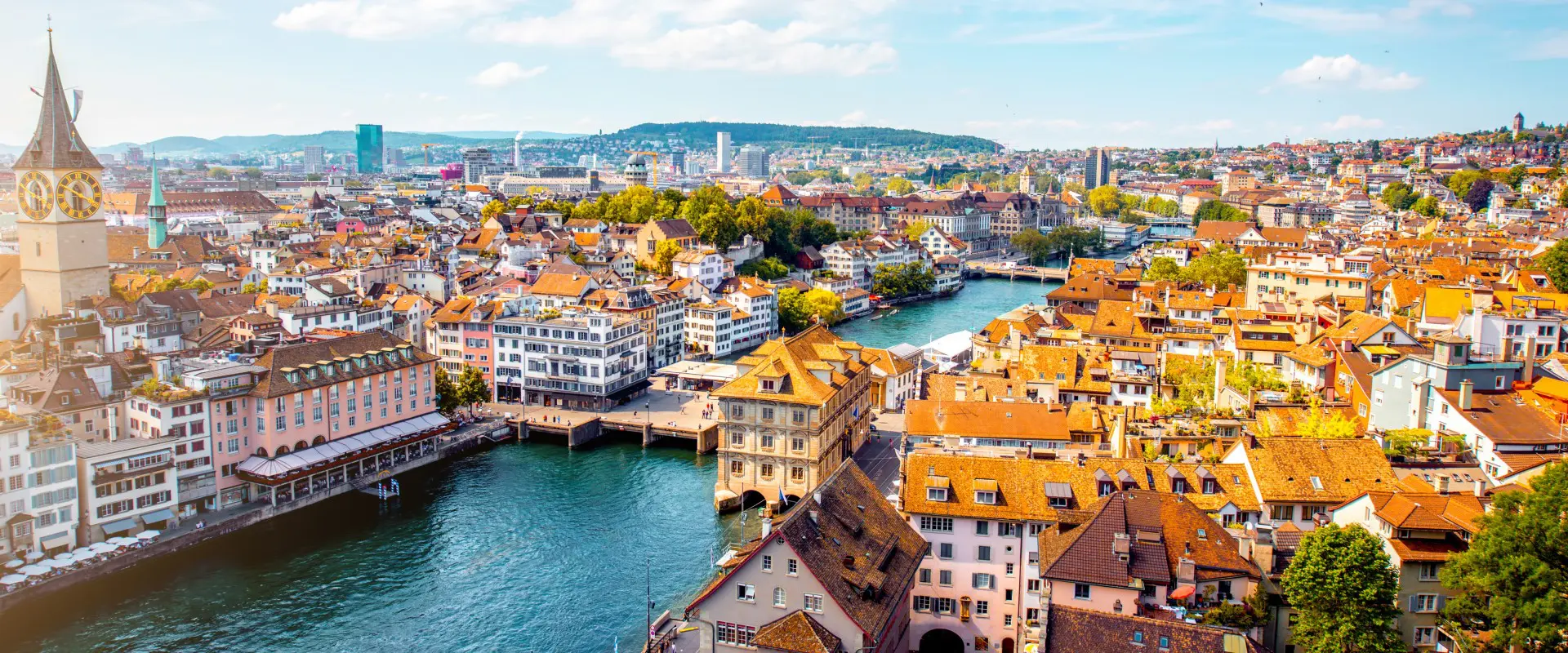
Moving to Switzerland from New Zealand is a big move, but one that opens the door to new opportunities, stunning alpine landscapes and an exceptional quality of life. Whether you’re relocating for work, family or a lifestyle change, there’s plenty to plan before you go.
This guide covers everything Kiwis need to know, from visas and finding work to the cost of living, where to live, and how to get your belongings safely to your new home. With over 39 years of experience moving Kiwis everywhere, we’re here to make your move to Switzerland as smooth as possible.
Key takeaways
- New Zealanders can visit Switzerland visa-free for up to 90 days in any 180-day period, but you’ll need a permit to live or work there.
- Most Kiwis move to Switzerland with a confirmed job offer, and the employer applies for the work permit.
- Switzerland limits permits for workers from outside the EU, with 8,500 available for 2026.
- New Zealanders aged 18 to 30 can work in Switzerland for up to 18 months through the Young Professionals agreement. There is no Swiss working holiday visa.
- You must register with your local commune within 14 days of arriving and take out Swiss health insurance within three months.
- Switzerland is 10 to 12 hours behind New Zealand, depending on daylight saving.
- Around 800 New Zealanders currently live in Switzerland.
- Used household goods can enter Switzerland duty-free with a packing list and proof of your move.
How many New Zealanders live in Switzerland?
According to the Ministry of Foreign Affairs and Trade, around 800 New Zealanders live in Switzerland, while more than 7,000 Swiss nationals call New Zealand home. So while you won’t find a big Kiwi community on every corner, you’ll be joining a close-knit group who’ve made the same move.
Switzerland also limits how many skilled workers it accepts from outside the EU each year. For 2026, the Swiss Federal Council has set the limit at 8,500 permits: 4,500 residence permits (B permits) and 4,000 short-stay permits (L permits). These places are shared between all non-EU countries, so it pays to plan early.
Is it easy to move to Switzerland from NZ?
Moving to Switzerland takes more planning for New Zealanders than it does for Europeans, but it’s very achievable with the right preparation.
Because New Zealand isn’t part of the EU or EFTA, Kiwis don’t have an automatic right to live and work in Switzerland. Here’s what that means:
- You’ll usually need a job offer first. Your Swiss employer applies for your work permit on your behalf.
- Employers must show they’ve looked locally. They need to show the role couldn’t be filled by someone from Switzerland or the EU.
- Skilled roles are favoured. Permits generally go to managers, specialists and people with strong qualifications and experience.
- Quotas apply. Each year there’s a set number of permits for non-EU workers.
- Your canton has a say. Switzerland is divided into 26 cantons, and the canton you’ll live in approves your permit.
If you hold a European passport through family ancestry, the process can be much simpler, so it’s worth checking your eligibility before you start.
Do New Zealanders need a visa for Switzerland?
For a short visit, no. To live or work in Switzerland, yes, you’ll need the right permit. Here’s a quick rundown of your options.
Visiting Switzerland
New Zealanders can visit Switzerland without a visa for up to 90 days in any 180-day period. This allowance covers the whole Schengen Area, so time spent in other European countries counts too.
From the last quarter of 2026, visitors from visa-free countries, including New Zealand, will also need an ETIAS travel authorisation before they travel. It’s a quick online application, but it’s worth checking the latest requirements before you book your flights.
Swiss work and residence permits
If you’re moving to Switzerland for work, your employer will usually apply for one of these permits:
- L permit (short stay): for jobs of up to a year.
- B permit (residence): for longer-term work, renewed regularly.
- C permit (settlement): for people who have lived in Switzerland long term.
- G permit (cross-border): for people who live in a neighbouring country and commute to work in Switzerland.
The Young Professionals agreement
If you’re aged 18 to 30, the Young Professionals agreement between New Zealand and Switzerland is a great way to start your Swiss career. It lets you work in your field of training for up to 18 months, and employers don’t need to prove they’ve searched locally first. Applications usually take four to six weeks to process.
Is there a Switzerland working holiday visa?
No. Switzerland doesn’t offer working holiday visas to New Zealanders. The Young Professionals agreement is the closest option for younger Kiwis wanting to work there.
Immigration rules can change, so we recommend speaking with a licensed immigration adviser or your employer’s HR team for up-to-date advice tailored to your situation.
How to find work in Switzerland as a New Zealander
Since most Kiwis need a job offer before they can move, finding work is usually the first big step. A few tips to help you get started:
- Search the main job sites. Try jobs.ch, jobup.ch (for French-speaking regions) and LinkedIn, as well as the careers pages of companies you’d like to work for.
- Talk to recruiters. Specialist recruitment agencies can connect you with employers who are open to hiring from overseas.
- Focus on in-demand industries. Finance and banking, pharmaceuticals and life sciences, technology, engineering, research and international organisations in Geneva all hire international talent.
- Brush up on the local language. Many multinational companies work in English, but German, French or Italian will open up far more roles.
- Check your qualifications. If your profession is regulated, such as healthcare or teaching, you may need your qualifications recognised in Switzerland.
Swiss salaries are high to match the cost of living. The median gross wage was CHF 7,024 a month in 2024, according to the Swiss Federal Statistical Office, although pay varies widely by industry, role and canton.
Cost of living in Switzerland compared with NZ
Switzerland is known for being expensive, and it’s worth budgeting carefully before you arrive. The biggest costs for most new arrivals are:
- Rent: the average Swiss apartment cost CHF 1,485 a month in 2024, before utilities and other ancillary costs, according to the Swiss Federal Statistical Office. Averages range from about CHF 1,000 a month in the Canton of Jura to just over CHF 2,000 in Zug, and you can expect to pay more in high-demand cities like Zurich and Geneva.
- Health insurance: every resident pays their own monthly premium, including children. In 2026, the average basic premium is CHF 465 a month for adults, CHF 326 for young adults and CHF 123 for children, with prices varying by canton, insurer and the deductible you choose.
- Groceries and eating out: the average Swiss household of around two people spends about CHF 640 a month on food and drink at home, based on the Federal Statistical Office’s 2023 Household Budget Survey. Eating out is on top of this.
- Childcare: full-time daycare is one of the biggest costs for families. Many daycare centres set fees based on income, starting from a few hundred francs a month, while full-time care in Zurich can cost more than CHF 3,000 a month per child.
The good news is that higher salaries usually help balance out these costs. Income tax is set at federal, cantonal and local level, so the amount you pay depends on where you live. It’s a good idea to compare a few cantons before you choose where to settle.
Best places to live in Switzerland
Where you settle will often depend on your job, but each region has its own feel and main language:
- Zurich: Switzerland’s largest city and financial centre, German-speaking, with a lively lakeside lifestyle.
- Geneva: home to many international organisations, French-speaking and very international.
- Basel: a hub for the pharmaceutical industry, German-speaking, right on the borders of France and Germany.
- Lausanne: a French-speaking university city on Lake Geneva.
- Bern: the Swiss capital, German-speaking, with a relaxed pace and a beautiful old town.
- Zug: a smaller German-speaking city known for its lower tax rates.
- Lugano: Italian-speaking, with a warmer climate in the south of the country.
Expatica provides a helpful guide on the top 10 cities.
Finding a home in Switzerland
Housing in Switzerland, especially in cities like Zurich, Geneva and Basel, can be competitive. To give yourself the best chance of finding a suitable place:
- Start your search early on sites like Homegate, ImmoScout24 or Comparis.
- Work with a relocation agent if you want help navigating Swiss rental expectations.
- Be prepared for documents like proof of income, references, your residence permit and a debt collection extract.
- Budget for a rental deposit of up to three months’ rent.
Most people in Switzerland rent rather than buy, so you’ll be in good company. We can also connect you with local relocation support if you need help on the ground.
Health insurance in Switzerland
Health insurance is mandatory in Switzerland and must be arranged within three months of arriving. Unlike New Zealand’s public system, Switzerland’s healthcare is private, but the government regulates a basic level of cover, so everyone has access to essential services.
Swiss healthcare is high quality, and you’ll pay a monthly premium plus a share of your medical costs each year. When setting up your cover:
- Choose a basic health insurance plan (LAMal).
- Compare options, as costs vary by provider, age and region.
- Consider optional extras like dental or private hospital cover.
Websites like comparis.ch are useful for comparing plans, or we can refer you to a trusted local adviser.
Life in Switzerland: language, climate and landscape
So, what’s life in Switzerland really like for a Kiwi? Here’s what to expect.
Languages
Switzerland has four national languages: German, French, Italian and Romansh. The language you’ll use day to day depends on where you live. German is the most widely spoken, French is common in the west, and Italian is spoken in the south. English is widely used in business and the larger cities, but learning the local language will make settling in much easier.
Climate and seasons
Switzerland has four distinct seasons, and they’re the opposite of ours. Expect cold, snowy winters, especially in the mountains, and warm summers that are perfect for swimming in the lakes. If you love the change of seasons in Central Otago, you’ll feel right at home.
Landscape and lifestyle
With the Alps, crystal-clear lakes and charming villages, Switzerland is a dream for anyone who loves the outdoors. Hiking, skiing and cycling are part of everyday life, and the public transport system makes it easy to explore. You’ll also be right in the heart of Europe, with Italy, France, Germany and Austria all on your doorstep.
Swiss customs
The Swiss value punctuality, neatness and privacy. Sundays are quiet days, so avoid noisy jobs like mowing the lawn or using the washing machine, and get to know the local recycling rules, which are taken seriously.
Time difference and distance between NZ and Switzerland
Switzerland is 10 to 12 hours behind New Zealand, depending on the time of year:
- Late October to late March: Switzerland is 12 hours behind NZ.
- Early April to late September: Switzerland is 10 hours behind NZ.
- The weeks in between: Switzerland is 11 hours behind, while only one country is on daylight saving.
That means a morning call in New Zealand lands in the evening in Switzerland, so catching up with family back home is easiest early in your day.
Zurich is around 18,400 km from Auckland. There are no direct flights, so most trips include one stopover in Asia or the Middle East, with total travel times of around 24 to 30 hours.
Your first weeks in Switzerland: a checklist
There are a few important tasks to tick off once you arrive. Here’s a simple checklist to keep you on track:
- Register with your local commune within 14 days of arriving, and before you start work. Bring your passport, employment contract and rental agreement.
- Collect your residence permit card.
- Take out basic health insurance within three months of arriving.
- Open a Swiss bank account.
- Exchange your New Zealand driver licence for a Swiss licence within 12 months.
- Enrol your children in school through your commune.
Shipping your belongings from NZ to Switzerland
Planning how to get your belongings to Switzerland? This is where we come in. Our international team will help you choose the right option for your budget and timeline.
- Sea freight: the most cost-effective option for a full household move.
- Air freight: faster, and ideal for a smaller shipment of essentials you need straight away.
- Storage: if you’re not ready to ship everything at once, we can store your belongings safely in New Zealand until you’re settled.
Before you pack, think about what’s worth taking. Swiss power sockets use a different plug type to New Zealand, so some appliances may need adaptors or be better replaced once you arrive.
Get a free quote today, and we’ll take care of the packing, shipping and paperwork for your move to Switzerland.
Customs and import regulations made easy
Bringing your personal belongings to Switzerland? There are a few rules to follow, but nothing to worry about when you have the right support.
To bring your household items into Switzerland duty-free, the goods generally must be used (not brand new) and for personal use. You’ll also need to provide some basic paperwork, like a packing list and proof you’re moving (a lease or job contract usually does the trick).
The customs process can seem complicated, but that’s where we come in. Our international team is experienced with Switzerland customs clearance services, and we’ll help take care of the paperwork, timing and requirements to avoid delays.
Bringing pets to Switzerland
Switzerland welcomes pets, but there are a few important steps to take:
- Your pet must be microchipped and vaccinated against rabies.
- You’ll need an EU pet passport or vet certificate.
- Up to five pets can be brought in for personal relocation.
We regularly assist with pet relocation from New Zealand to Switzerland, so if you’re bringing a furry friend, we’ll help make it easy and stress-free.
Settling in and building a life in Switzerland
Adjusting to life in Switzerland takes time, but with a little effort, you’ll soon feel at home. Here are a few tips to help you settle in:
- Learn the local language: German, French or Italian, depending on the region.
- Join local clubs, sports groups or cultural associations to connect with people.
- Use expat networks like InterNations, Meetup or Facebook groups to meet others.
- Embrace Swiss customs like punctuality, neatness and privacy.
Frequently asked questions
Can New Zealanders move to Switzerland?
Yes. New Zealanders can live and work in Switzerland with a valid permit, which usually starts with a job offer from a Swiss employer. If you’re aged 18 to 30, you can also apply through the Young Professionals agreement for up to 18 months.
Is it hard to move to Switzerland from New Zealand?
It takes more planning than it does for EU citizens, because New Zealanders need a work permit. Employers must show they couldn’t hire locally or from Europe, and annual quotas apply. With a skilled role, a job offer and good preparation, it’s very achievable.
Do New Zealanders need a visa for Switzerland?
Not for short visits. New Zealanders can stay up to 90 days in any 180-day period in the Schengen Area without a visa. To live or work in Switzerland, you’ll need a residence and work permit.
Is there a working holiday visa for Switzerland?
No. Switzerland doesn’t offer working holiday visas to New Zealanders. The closest option is the Young Professionals agreement, which lets Kiwis aged 18 to 30 work in their field for up to 18 months.
How far is Switzerland from New Zealand?
Zurich is around 18,400 km from Auckland. There are no direct flights, so most trips include one stopover in Asia or the Middle East, with total travel times of around 24 to 30 hours.
What is the time difference between New Zealand and Switzerland?
Switzerland is 12 hours behind New Zealand from late October to late March, and 10 hours behind from early April to late September. For a few weeks in between, while only one country is on daylight saving, the gap is 11 hours.
What languages are spoken in Switzerland?
Switzerland has four national languages: German, French, Italian and Romansh. The language you’ll use depends on the region you live in. English is widely spoken in business and the larger cities.
What is healthcare like in Switzerland?
Swiss healthcare is high quality and privately delivered. Basic health insurance is compulsory for every resident and must be arranged within three months of arriving. You’ll pay monthly premiums plus a share of your medical costs.
How much is the average salary in Switzerland?
The median gross wage in Switzerland was CHF 7,024 a month in 2024, according to the Swiss Federal Statistical Office. Salaries vary widely by industry, role and canton, and living costs are high too.
How long does it take to ship belongings from NZ to Switzerland?
It depends on whether you choose sea or air freight. Get in touch and we’ll give you a timeline and a free quote for your move.
Ready to make your move to Switzerland?
Moving to Switzerland from New Zealand is a big step, but with the right preparation and support, it’s one you can make with confidence. From packing and shipping to customs and settling in, The Moving Company is here to make your relocation as easy as possible.
Get your free quote today and let’s get you moving.